


Xsortex HUB
1 Channel 5V Relay Module Optocoupler Isolation for Arduino ESP32
1 Channel 5V Relay Module Optocoupler Isolation for Arduino ESP32
Couldn't load pickup availability
- Technical Support 24/7
- Same Day or 1-Day Shipping near Navi Mumbai
- Free shipping on Orders Above Rs 300/-
 Cash on Delivery available
- Original Product guarantee
- 7-Day Easy Return/Exchange

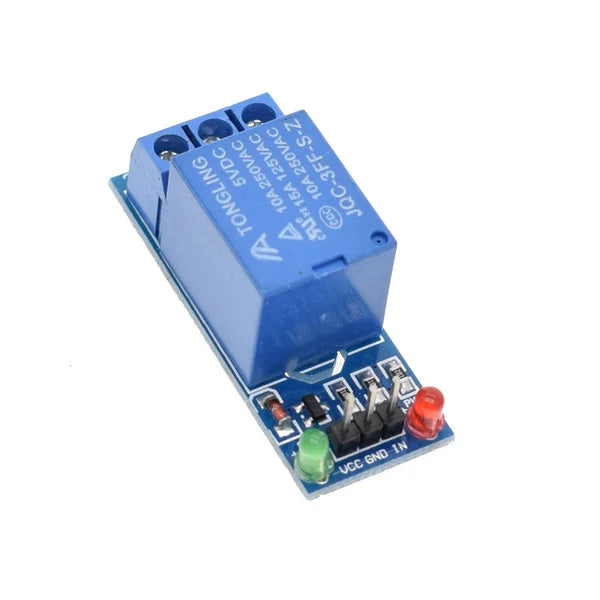
1 Channel 5V Relay Module – Optocoupler Isolation for Arduino & ESP32
The 1 Channel 5V Relay Module allows microcontrollers to switch high-voltage AC or DC loads using a low-current GPIO signal. The onboard optocoupler isolation protects your microcontroller from voltage spikes and electrical noise generated by inductive loads, making it a safe and reliable choice for home automation and IoT control circuits.
Key Specifications
- Channels: 1
- Control Voltage: 5V DC (TTL compatible)
- Relay Rating: 10A @ 250V AC / 10A @ 30V DC
- Trigger: Active LOW (default) — LOW signal activates relay
- Isolation: Optocoupler (PC817 or equivalent)
- Indicator LED: Onboard status LED
- Connector: 3-pin (VCC, GND, IN) + screw terminals (NO, COM, NC)
Compatibility & Use Cases
This relay module is directly compatible with Arduino, ESP32, NodeMCU, and Raspberry Pi GPIO pins. Common applications include:
- Home automation — controlling lights, fans, and appliances
- IoT-connected smart switch and remote control systems
- Motor and pump ON/OFF control circuits
- Automated irrigation and greenhouse control
- Industrial equipment switching and safety interlocks
Use the NO (Normally Open) terminal for loads that should be OFF by default, and NC (Normally Closed) for fail-safe circuits that must stay ON unless triggered.
Frequently Asked Questions
Can this relay switch 230V AC home appliances in India?
Yes. The relay contacts are rated up to 10A at 250V AC, so they can switch typical lights, fans and small appliances. Always insulate mains wiring, keep it away from the low-voltage side, and follow proper electrical safety practices.
Is the trigger signal active HIGH or active LOW?
This module is active LOW by default, meaning the relay energises when the IN pin is pulled LOW. The onboard LED lights up whenever the relay is active.
Will it work directly with a 3.3V ESP32 GPIO pin?
Power the module from 5V and connect IN to your GPIO. A 3.3V signal drives most of these boards reliably; if your board does not trigger, add a small transistor stage between the GPIO and the IN pin.
What is the difference between NO, COM and NC terminals?
COM is the common contact. NO (Normally Open) connects to COM only while the relay is active, and NC (Normally Closed) is connected to COM until the relay activates. Use NO for standard on-demand switching.
Order now from Xsortex HUB and get fast delivery across India.
- Choosing a selection results in a full page refresh.
- Opens in a new window.